Deciding when to put down a beloved elderly pet is a heartbreaking task. As HSPs, though, we bring unique strengths to the decision.
Thanks to all of you who sent along requests for articles. I look forward to writing about each of those topics in the coming weeks. Christina wrote,
I wonder if you would be willing to write about the process of knowing/deciding when to put down a beloved elderly pet, particularly when it is not clear cut.
Christina, thank you for bringing up this question about a very difficult decision—one you may have had to make since you wrote in August.
I’m a novice member of the vast society of heartbroken humans who have had to euthanize a beloved pet: growing up, our family pets all blessedly died in their sleep. As always, though, I can share my own experience, along with wisdom from my favorite cat behavior expert. I’m sure many of you reading this have seen beloved animal companions through their last days, and I sincerely hope you will add your insights and comments and comfort below.
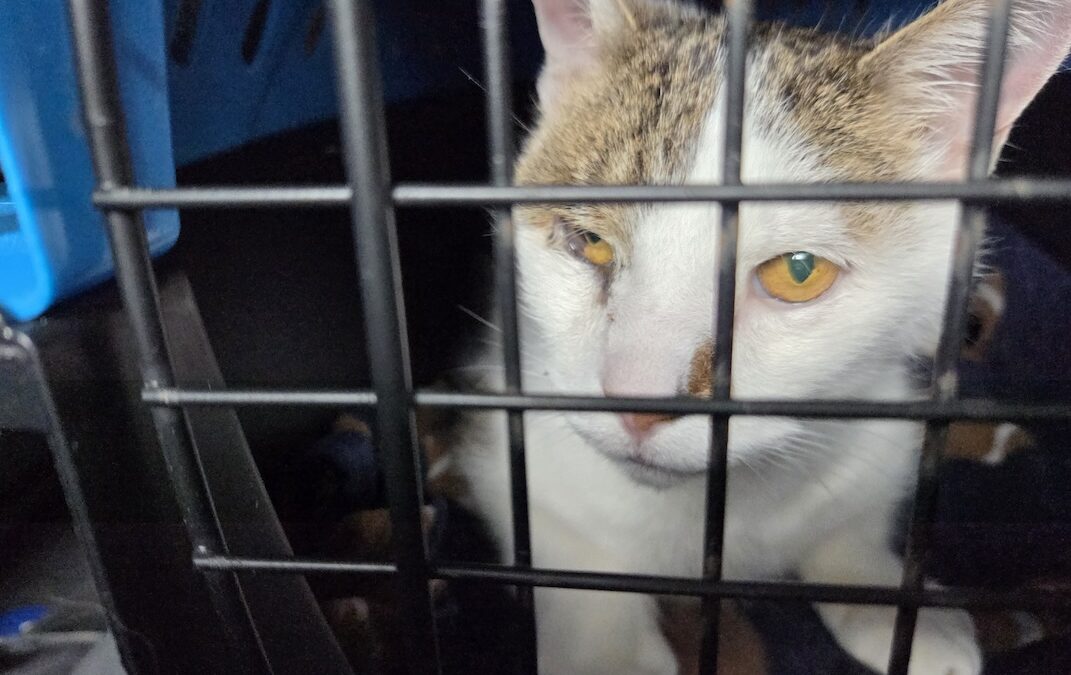
Saying goodbye to Chairman Whiskers
This was the last living picture I took of our lovely foster cat, Chairman Whiskers. I was squeezed into the back seat of the car next to his cage, petting him through the bars and trying to enjoy these final minutes in his company. Our decision to have him euthanized that day followed a final catastrophic seizure which left him unable to use his legs.
From a medical perspective, Chairman’s condition made our decision straightforward. The shelter staff agreed that he could no longer lead any sort of dignified or functional life. They were worried that any subsequent seizures would likely leave him in agony and total debility.
On an emotional level, however, my partner and I agreed: the decision was the most painful one either of us had ever made. He was here, living and breathing. Then, after we gave the final OK to the euthanasia technician, he wasn’t. Death is so final. My friends who have been through this many times have told me that it gets a bit easier over time. However, I have the impression that that is not because it hurts less. It’s because you have a better idea how much it is going to hurt, and you know you’ve gotten through it before.
Talking about death
My parents both spoke openly to me and my siblings about their wishes around dying. This was a huge blessing. (If you have not had this conversation with your beloved elders or pondered it for yourself, I highly recommend reading Atul Gawande’s book, Being Mortal. It offers a thoughtful, compassionate way to start that conversation.)
You can’t have that conversation verbally with your companion animal. But you can listen in other ways and have the conversation on their behalf. In his book, Total Cat Mojo, Cat behaviorist Jackson Galaxy writes,
When is it time to say good-bye to a companion animal? This question cuts to the heart of our end of the deal when it comes to the unconditional love that animals show to us. We have the ability to show them mercy at a time when they may be asking for that mercy. We have to remember that the spirit of euthanasia is probably best defined by its literal translation from the Greek: a kind death. (p. 261.)
His best advice on timing was, “Never on their worst day.” That’s what the shelter staff said about Chairman, too. They had seen people wait too long. It was terrible for everyone— for them, for the animal, and for the owner.
This is so hard, though. It takes courage to offer your animal a kind death, because it means you are not waiting until they are suffering badly. You choose to feel the pain of letting them go even though they might have lived a few more hours or days, to save them the agony of waiting too long.
Taking care of yourself in the process
Jackson Galaxy says the hardest part is holding on to the fact that it’s not about me, or my pain, or the grief I will feel when my pet is gone: it’s about how I can serve my pet now. That pain can be an overwhelming challenge for many people. The vet tech who euthanized Chairman Whiskers thanked us for staying with him. That’s how I learned that many people don’t.
This is the good news: HSPs are uniquely suited to these moments. We’ve been aware of death all along. We think about it. We aren’t afraid of it. We are even willing to sit with the dying.
I’m sure you know your pet like no one else does, Christina. You can use your sensitive empathy and your ability to read subtle signs to decide when the time is right—as you may already have done. You can trust your senses, your guidance, and your love.
Then you need to take care of your own tender heart. A broken heart hurts so badly. As I grieved for Chairman, it helped me to remind myself that I had left all my cards on the table. I loved him fully and freely, and ending his life before he suffered too much was our final act of love. But it’s still heartbreaking. You need to have people you can turn to, who can let you grieve as much as you need to.
Image credit: ©2025 Emily Agnew
Note: No AI was used in the production of this newsletter. All the words in it were written and edited either by me, or by other humans whose contributions are clearly quoted and credited.