
When you respect your natural rhythms, you both save and create energy.
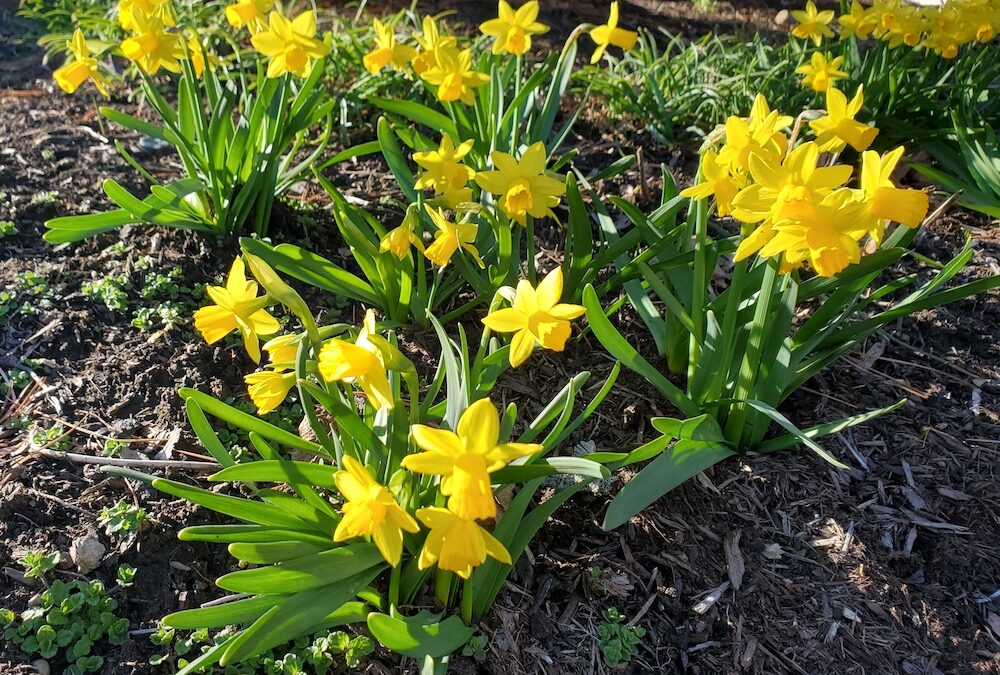
Our miniature daffodils have burst into bloom. I can feel the spring changes coming beyond the garden, too. We have daylight after dinner. The birds are singing more. We’ve even had days where we could go outside without a coat.
This reminds me how much I’m affected by cyclical rhythms of nature. Of course this is true for all humans, but especially so for highly sensitive people (HSPs). As I’ve gotten better at staying tuned in to my body, and I’ve become more aware of ways these weekly, monthly, and seasonal rhythms impact my body and my mind. I wonder about your experiences with this. If realizations come up for you as you read, I hope you’ll share them in the comment section on the blog.
Putting the “flexible” into your “sturdy, flexible infrastructure”
I often emphasize our HSP need for a sturdy, flexible personal infrastructure. In my own life, I’ve focused mainly on my daily routines: sleep, exercise, self-regulation, and time alone to reflect and process. And I’ve pondered the need for flexibility, so I can adjust my routines in a crisis.
I’ve gradually realized that I need this quality of flexibility on a bigger scale, too. Just as there is no one daily routine that could possibly work for all HSPs, there is no one routine that can work for me all the time.
For example, my energy is consistently different on Mondays than on Fridays. It’s different in late December than it is in September. And when I still had a monthly cycle, my energy level was definitely different for that week, each month.
Have you noticed weekly, monthly, and seasonal patterns of energy? For me, these can manifest in different ways:
- A general feeling of moving through space more quickly—or more slowly
- A notable willingness to undertake certain tasks— or a notable lack of willingness
- Patterns of feeling peaceful and happy—or feeling generally low
I feel my best when I observe and adjust for these energetic patterns. I’ll offer some examples.
Craving order at the end of the week
I’m not a numbers person. My brain gets overloaded quickly, and I make mistakes. So it makes a big difference if I can at least do my financial tasks when my brain is up for them. That time, as it turns out, is towards the end of the work week. I can’t stand doing numbers on Mondays or Tuesdays, but by Friday, something shifts and I can even enjoy the sensation of creating order in my affairs.
Similarly, I have zero desire to do chores like watering the plants, or vacuuming, or picking up, during the week. But on Saturdays, I genuinely enjoy doing all those things, in no particular order, flowing from one thing to the next. The flow part is key. On weekends, I crave unscheduled time. During the week, by contrast, I like having a schedule.
The important takeaway is obvious, though not always simple to implement: the better I manage to align my plans with these rhythms, the better I feel. If I get my flow time on the weekend, for example, I start the next week refreshed. If I schedule myself up on the weekend—even if it’s all fun stuff—I feel cranky and tired on Monday.
Have you noticed rhythms of your own, week to week? Have you found ways to adjust what you do, when, to better suit your natural tendencies? Structuring your life around your natural rhythms, when you can do it, is a deep form of kindness to yourself.
Monthly rhythms
For women who haven’t been through menopause, that monthly rhythm is unmistakable. It wasn’t until a Zen teacher spoke to me about this that it even occurred to me to make any adjustments during the days of my period.
She suggested that women need more rest during our monthly cycle. She asked if I had more vivid dreams then. I realized that I did. After that, I began paying closer attention, to listen to the messages my dreams were bringing. And I was gentler with myself about needing more rest.
If you are a woman reading this, have you noticed a greater need for rest and for time to process your dreams during your monthly cycle? If you are a man, have you noticed patterns to your vivid dreams that relate in any way to the calendar? Or are your dreams solely subject to the current contents of your life?
Seasonal rhythms
There’s a natural slowing that occurs in the long, dark, cold winters here. I seem to need more sleep, and I find it harder to get out of bed. Allowing myself extra time in the morning is an act of self-compassion. I can only imagine what it’s like for people who suffer from seasonal affective disorder.
These mild hibernation tendencies are hardly news. However, we live in a culture that lionizes ever-increasing productivity, speed, and responsiveness…and while our minds are trying to act like lions (or tigers), our bodies have more in common with bears.
I think it’s important to remind ourselves of this biological reality, lest we start treating ourselves as if we were machines. HSPs are the canaries in that particular mineshaft. We don’t feel good when we muscle ourselves around too much.
Finding your own rhythm
These effects are highly individual. There’s no one-size-fits-all information or advice about these rhythms, other than simply to observe. Be patient. Be kind. Make adjustments. I’ve learned to recognize the unpleasant feeling in my body of trying to push the river. That’s a cue to ask myself what it might look like to respect my rhythms, instead of trying to override them.
One last observation: in my experience, something in me is perennially scared that if I respect my rhythms, I’ll never get anything done. That isn’t true. When I find the right rhythm and pace, I can lope along for great distances without getting tired.
Image: ©2026 Emily Agnew
Note: This newsletter is 100% human. I wrote it, with no AI assistance.

















When I used to have a period one of the things that I would put on my calendar at work was put a period symbol when I was expecting it. .
That’s it.
One little punctuation mark.
It would remind myself not to plan anything extra around that date, make sure I didn’t have back to back meetings and generally ensure I didn’t overwhelm myself with any extra curricular activities. I’d look after myself, at work and at home, around that dot. 🙂
That’s a creative and effective solution, for sure!–and I’m celebrating that you had the healthy self-awareness to know that you needed extra space and time around that time each month. I’m afraid I didn’t develop that level of awareness until it was too late.