
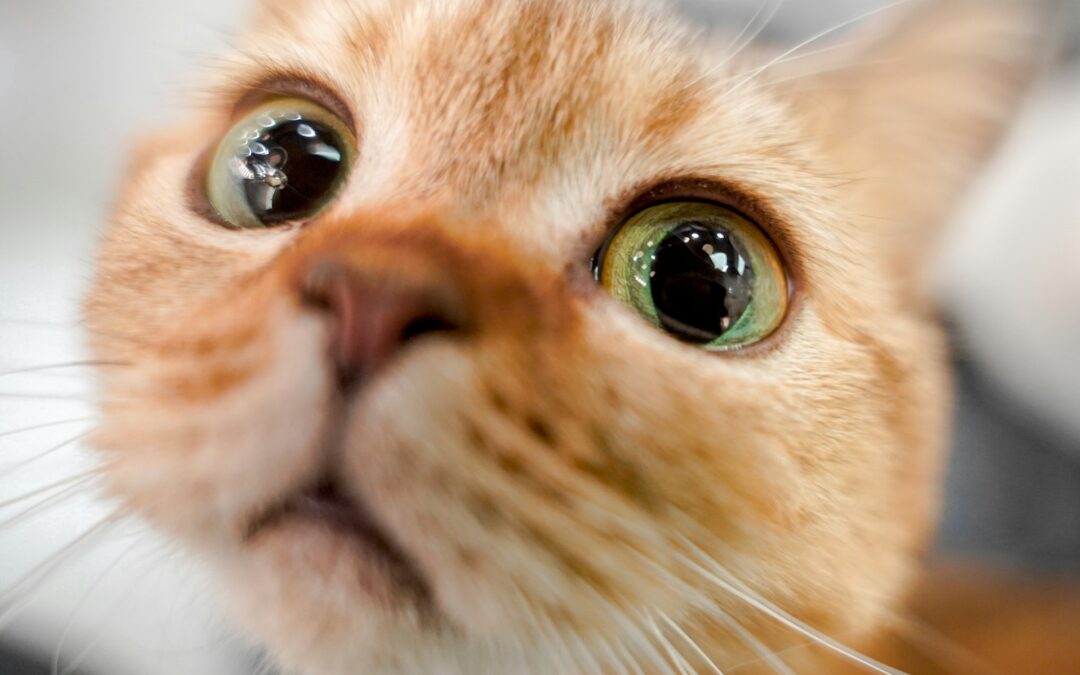
If you can shift your attitude towards others’ anger, you hold the key to transforming your relationships.
Every Tuesday afternoon, I put on my old black pants and my “Be Kind To Animals” hoodie. I snap on my fanny pack, which contains my ID on a lanyard, an 18-inch telescoping spoon, and an equally long telescoping back scratcher. Then I head down to the animal shelter for my volunteer shift with the cats.
I love these cats. I love the friendly ones, the shy ones, the swatty ones. I’ve learned from all of them—about cats, about humans, and about myself.
One thing I’ve learned is how to take aggression way, way less personally. For an HSP, this is a big deal. I’ve read articles online about how to handle others’ anger and perceived aggression. They seem logical. However, they always start with an order: “Stay calm.”
Ha. As any HSP knows, “stay calm” is not a doable request. I’ve meditated for years. I’ve done yoga, breathwork, and all sorts of powerful inner work. I’m pretty darn calm a lot of the time. Raise your voice at me, though, and my nervous system instantly redlines. Scream at me, and I freeze.
I happen to have a history of being screamed at. As a result, my reaction is particularly intense. Even if you have no such history, though, it’s part of your human wiring to get activated in the face of aggression, real or perceived. For highly sensitive people, this nervous system reaction is even more pronounced.
I’ve written about how to slow down stressful interactions to help your nervous system stay within a manageable level of arousal. That is an enormously valuable skill, especially if you are fielding someone’s anger. However, the cats have taught me there are preventive actions I can take further upstream, as well.
Shifting my attitude towards anger and aggression
One article I read about managing others’ anger asserted that “Most of us are not actually afraid of other people’s anger; we’re afraid of their aggression and what it might lead to.” I’m not sure where the author got that idea. They must not have consulted many HSPs. In any case, I did not find it practical to try to distinguish between anger (“the feeling”) and aggression (“acting on the feeling.”) My nervous system can’t tell the difference. What I need is a radical shift of attitude.
Enter my feline friends at the shelter. They have taught me that my attitude is far and away my most powerful tool for handling others’ perceived aggression. In fact, if I had to distill the single most important lesson I learned in the cat behavior course I took at the shelter (a requirement for behavior volunteers), it was this:
A cat’s behavior reflects how it is feeling. Everything cats do is for a reason. If I take the behavior as a personal attack, I distract myself from that truth and delay discovering what the reason is for the behavior.
Now, re-read that paragraph. Substitute the words “person” and “people” for “cats.”
Can you see how this could change your whole stance towards others’ messages—even when those messages arrive on your emotional doorstep seemingly buried in a mound of fresh, fragrant cow dung, studded with verbal razor blades? Whatever the message, you will be much better able to hear it and act wisely on it if you use your imagination to pretend the other person is an upset shelter cat.
My stance is 100% my choice
At the shelter, my effectiveness depends entirely upon my attitude. If I judge a cat as mean, aggressive, destructive, I’ll never be able to connect to the reasons for its behavior. Even worse, because animals, like people, are very sensitive to others’ energy, my negative attitude will exacerbate the cat’s stress.
On the other hand, if I stay open, kind, and curious, my interactions with a stressed cat will help it experience that humans can be a source of good things. I know these cats are scared, in pain, or missing their humans. The shelter is a scary place. So I find it easy to feel patient and kind towards them. This inspires me to try to bring that forgiving stance into my human relationships.
With both cats and humans, this can require playing a long game. I may not establish a safe connection in one sitting, or even a half dozen.
Take Mackie, for example, a handsome gray cat. I couldn’t find him at first. He had wedged himself behind his carrier, trying to feel safe. When I moved it to offer him a tasty snack—my most powerful peace offering—Mackie instantly took off for the far end of his cage. His tense body, his pinned-back ears, and his dilated pupils showed his high stress level.
I extended my spoon to its full length and offered him some fish paste. He hissed and spat. Yet he accepted a few pets with the back scratcher: a bit of progress. At that moment, unfortunately, two men came into the adoption area talking loudly. Mackie visibly tensed. Evidently deciding that I was the lesser of two evils, he army-crawled back my way and pushed himself behind his carrier again, as far as possible from the loud voices. Helping him feel safer was going to take more than one session. However, I knew that any kind of responsive, non-threatening interaction helps.
Take away the words, to see the feelings and needs
Cats, of course, don’t use words. Notice how much easier it was to have empathy and curiosity towards Mackie, because I focused on his actions and his body language. Imagine that instead of running to the other side of the cage and hissing, he had spat, “Back the &%@# off, you insensitive *&#$!” I would likely have taken his words personally, distracting me from the feelings causing his behavior.
In short, when we are fielding an angry person, we need to let the words wash over us so we can listen for the feelings and needs underneath. Friends of mine, a married couple, told me that they had an agreement. Anytime they’d get dangerously angry with each other, they’d switch to expressing themselves in barks and growls. What a brilliant solution! They could express any amount of emotional intensity, without saying anything they might dearly regret later.
I recently received a text from someone close to me which felt like an attack. At first, I felt the familiar flush of adrenaline. My mind started generating defensive, indignant responses. Ten minutes later, though, I found myself thinking, “If this person were a cat, would I be seeing this differently?”
My body softened as I pictured a frightened cat at the shelter, lashing out. I found I could feel in my body the vulnerability and fear that had caused the person to seemingly attack me. Having responded in a much softer way than usual, I was astonished to find out that the person was actually trying to say something really nice to me. They were feeling badly—like the cats at the shelter—and as a result, their words came out with an unintended edge. Afterwards, we felt closer to each other rather than more distant.
I offer a deep bow to my teachers at the shelter.
Note: This newsletter is 100% human. I wrote it, with no AI assistance.

















My husband’s rage is his default reaction to even minor irritations. He has worked on it for decades with only minor improvement. It is almost never directed AT me, but in my presence, which activates my nervous system just as much.
So it’s not the “personal” part for me, like an attack, but my framing it that he doesn’t love or respect me when he keeps doing it when he knows how much it affects me.
It’s a work-in-progress to learn to stay calm and “let it wash over me.”
I appreciate this post and would welcome more on this subject.
Mary, that sounds challenging. As you say, even if the anger isn’t directed at you, you still feel the intensity of it in your nervous system. Thanks for explaining that for you, the trigger for upset is not telling yourself you are being attacked—because you aren’t. Rather, it’s telling yourself he must not love or respect you, considering that he keeps doing this even knowing how much it affects you. He has worked on this for years but not gotten much relief. This sounds like it might be a trauma reaction–the “fight” end of fight/flight/freeze. Whatever it is, though, at this point, is sounds like it might be kindest to yourself to accept that this may be how it is for the foreseeable future, since you are powerless to change him. The good news is that there is one area over which you have more choice and control: you can examine the belief that his anger episodes mean he doesn’t care about you. Not easy, but powerful.